
Longevity Digest — June 8–15, 2026

Longevity Digest — June 8–15, 2026

This week, epigenetic reprogramming moved from theory to human trial: Life Biosciences dosed the first participant in ER-100, the world's first epigenetic reprogramming gene therapy, targeting damaged retinal cells in glaucoma patients. Sinclair relaunched his Lifespan podcast to explain the science behind it. Rhonda Patrick published a landmark 2h39min episode with Steve Horvath, who ranked interventions by how reliably they move mortality-predicting clocks — GrimAge leads, semaglutide-driven weight loss registers strongly, and partial reprogramming is promising but bounded. Peter Attia reframed brain lipidology with Tom Dayspring (statins do not harm the brain's cholesterol system) and documented a critical gap in breast cancer screening uptake. Bryan Johnson highlighted a pancreatic cancer drug that nearly doubled survival.

Longevity Research Brief from Top Voices
June 15, 2026 · 11:23 AM
2 subscriptions · 5 items

Research Brief

This week, epigenetic reprogramming stopped being a theory. On June 9, Life Biosciences injected the first human participant in the ER-100 gene therapy trial, making it the world's first epigenetic reprogramming therapy to reach clinical testing. 1 David Sinclair spent most of the week explaining why this milestone matters, using the relaunched Lifespan podcast as a classroom for the science underneath it. Rhonda Patrick published a 2h39min deep-dive with the man who built the clocks we use to measure whether any of this is working — Steve Horvath. Peter Attia went deep on cholesterol biology in the brain and on breast cancer screening, two areas where, as he framed it, implementation is already failing people who could be helped right now. Bryan Johnson highlighted a Phase 3 pancreatic cancer drug trial and shared his breakfast plate.
Below is the week of June 8–15, 2026, organized by expert.

Peter Attia — cholesterol, the brain, and screening that isn't getting done

The brain's cholesterol system is nearly sealed off from the rest of you

Episode #395 of The Peter Attia Drive, released June 8, brought back lipidologist Tom Dayspring, M.D. for his eighth appearance. 2 The episode is about brain lipidology — a topic Dayspring considers deeply misunderstood — and the practical implications for the fear that statin use will damage cognitive function.
The episode's organizing fact: the brain's lipid and lipoprotein system operates almost independently of the peripheral circulation. Dayspring stated it plainly: "The brain lipid and lipoprotein system that we're going to talk about has almost nothing to do with the plasma transportation of lipids and lipoproteins." 2 The blood-brain barrier is the mechanism: LDL particles, which carry cholesterol in the periphery, cannot cross it. Every neuron synthesizes its own cholesterol on-site. The brain is a closed system for its primary structural lipid.
That isolation is why the common fear — that lowering LDL will "deprive" the brain of cholesterol — doesn't hold up. Dayspring put it directly: "Unfortunately, a prevalent belief out there in the real world is 'I don't ever want to lower LDL cholesterol too much, because I'll deprive the brain and I'll injure the brain'... and that is not true." 2 He added that LDL's primary purpose is returning cholesterol to the liver, not delivering it to cells — something most people, including many physicians, have backwards.
Other topics from the episode: the APOE4 genotype's role in Alzheimer's risk (it disrupts brain-specific cholesterol transport, not peripheral cholesterol); the biomarkers desmosterol and 24S-hydroxycholesterol as indirect measures of brain cholesterol metabolism; possible cognitive benefits of ezetimibe beyond apoB reduction; EPA/DHA evidence in brain health; and obicetrapib, an emerging CETP inhibitor (discussed around the 1:31:00 mark) with potential implications for both cardiovascular and cognitive outcomes. The second half of the show notes — covering obicetrapib, ezetimibe, and omega-3 detail — is paywalled.
Actionable takeaway: The evidence does not support avoiding statins out of concern for cognitive harm. For anyone carrying APOE4, the relevant risk pathway is brain-specific cholesterol transport — a separate question from LDL-lowering treatment.

Breast MRI should reach 9% of women; it reaches 0.4%

On June 13, Attia and Lauren Fritsch published a free newsletter post titled "Beyond the mammogram: a framework for smarter breast cancer screening." 3 The post is comprehensive — 22 minutes to read, 44 academic references — and organized around a single argument: the gap between what screening science allows and what women actually receive is not a knowledge failure, it's an implementation failure.
The numbers that drive that conclusion:
  • Regular screening reduces breast cancer mortality by 25–42%. Cancers found through screening average 12mm at detection; those found by symptoms average 24mm. 3
  • At least 9% of women meet criteria for breast MRI under major guidelines. The actual utilization rate is 0.4% — less than 1 in 20 of those who should be receiving it. 3
  • For women with extremely dense breasts: adding MRI after a negative mammogram cut the rate of interval cancers in half — from 5 per 1,000 with mammography alone to 2.5 per 1,000 with MRI added (Bakker et al., NEJM 2019). 3
  • Women 35–39 with risk factors have a cancer detection rate roughly 3× higher than average-risk women aged 40–44. 3
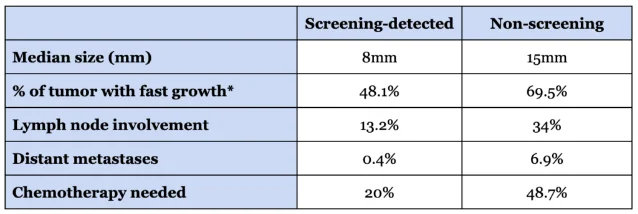
Comparison table: screening-detected vs. symptomatically detected breast cancers — median size 12mm vs. 24mm, lymph node involvement 19% vs. 37%
Screening-detected vs. symptomatic detection: tumor size, lymph node involvement, and downstream chemotherapy need. 3
The four major guidelines disagree on when to start and how often to screen. USPSTF recommends mammography every two years starting at 40. ACS, ACR, SBI, and NCCN recommend annual mammography starting at 40, with MRI added for high-risk women starting earlier. Attia and Fritsch came down clearly: "Screening should not be passive. It should be deliberate." 3
Their five-action framework: (1) complete a formal risk assessment (Tyrer-Cuzick model) by age 25; (2) assess your personal tolerance for false positives — roughly 10% of screening mammograms lead to callbacks, but only ~5% of those callbacks result in a diagnosis; (3) choose an imaging modality matched to your risk profile; (4) for average-risk women, start annual mammography at 40 and add MRI if high-risk; (5) consider a baseline mammogram in your 30s to establish breast density. They characterized the MRI utilization gap as "an implementation failure: we already know how to identify many high-risk women and screen them more effectively, but in practice we are failing to match the right women to the right protocols." 3
Note: @PeterAttiaMD on X has been dormant since February 2, 2026. Both items above came through peterattiamd.com only.

David Sinclair — the first human epigenetic reprogramming trial, and a week of ITOA lectures

ER-100 doses its first patient

On June 9, Life Biosciences administered the first dose in the ER-100 Phase 1 trial — the world's first epigenetic reprogramming gene therapy to enter human clinical testing. 1 The therapy delivers three transcription factors — Oct4, Sox2, and Klf4 (OSK), deliberately excluding c-Myc to avoid oncogenic risk — via intravitreal injection to rejuvenate damaged retinal ganglion cells in patients with glaucoma and non-arteritic anterior ischemic optic neuropathy (NAION). Life Biosciences received FDA clearance for ER-100 in January 2026. The trial enrolls 18 patients across three US sites; Dr. Joe Rizzo at Harvard runs the Boston site.
Nature's Heidi Ledford reported the dosing on June 9. 1 Life Biosciences CSO Sharon Rosenzweig-Lipson told Nature that no serious adverse effects were observed in rodent and monkey studies. The field's skeptics remain vocal: Matt Kaeberlein (Optispan) told Nature, "Reprogramming has a big upside if it can be used safely in people. The technology is still really early, and the potential for catastrophic side effects is high." 1
The therapy's origin story: Sinclair's then-PhD student Yuan Lu spent three years working through failed approaches before the OSK combination proved out. In 2017, OSK alone reset the epigenetic clock of human cells by up to 75% in lab conditions. A 2020 Nature cover paper demonstrated that OSK reversed aging and restored vision in mice with glaucoma and natural aging. 4

Lifespan Season 2 returns with the full ITOA lecture

On June 11, Sinclair released Lifespan Season 2 Episode 1, the first all-new episode of the series. 4 5 The episode runs 1 hour 47 minutes and is effectively a complete lecture on the Information Theory of Aging (ITOA) — from the original 1996 MIT yeast experiments through the 2020 Nature cover paper, to the ER-100 first-in-human milestone.
Sinclair's central framing: aging is a loss of epigenetic information, not an accumulation of irreversible DNA damage. The genome (the digital layer) remains largely intact; what changes is the epigenome — the methylation tags on cytosines that tell each cell which genes to express. As sirtuins like SIRT1 spend time repairing DNA breaks, they drift from their normal regulatory positions. Gene expression patterns shift. Neurons start expressing genes they shouldn't. The cells lose identity. Sinclair described this as the Waddington landscape flattening — cells that were once precisely differentiated become indistinct.
The $100 genome milestone, reached in early 2026, appeared in the lecture as a practical marker: full genome sequencing now costs what a blood test costs. 4
Loading content card…

SIRT1 redistribution as the molecular mechanism of ITOA

On June 13, Sinclair published a detailed X thread revisiting a 2009 paper from his lab by Phillip Oberdoerffer as foundational evidence for ITOA. 6 SIRT1 (the mammalian equivalent of yeast Sir2) normally silences repetitive DNA and maintains gene expression patterns across the genome. When DNA damage occurs, SIRT1 relocates to the break sites to assist in repair — necessary and useful in the short term. But over a lifetime of breaks, the protein spends increasing time away from its normal regulatory positions. As Sinclair wrote: "When DNA damage occurs, SIRT1 moves away from these regions and relocates to DNA breaks to assist in repair. As a result, gene expression patterns change in ways that closely resemble those seen in aging mouse brains." 6
Increasing SIRT1 levels improved survival in mice with genetically unstable genomes and reduced many of the age-associated gene expression changes. His summary: "These findings suggest that aging may result, at least in part, from the repeated redistribution of SIRT1 and other chromatin-regulating proteins as they respond to DNA damage, gradually disrupting the youthful organization of the genome." 6
A related endorsement from June 10: Sinclair highlighted a Geromedicine review by Gutierrez and Tyler (Weill Cornell Medicine) showing that nucleolar expansion during aging functions as a "mortality timer." 7 8 Once a cell's nucleolus exceeds a Nucleolar Size Threshold (NST), Rad52 — the yeast equivalent of human BRCA2 — mislocalizes into the nucleolus instead of repairing DNA breaks at the periphery, triggering rDNA instability and cell death within approximately five more divisions. 8 Sinclair connected this to his own 1997 yeast work: "The nucleolus of cells explodes as cells divide, due to DNA breaks that disrupt the epigenome and cause aging. These discoveries in 1997 formed the basis of The Information Theory of Aging." 7

The NAD+ field doesn't measure blood; it measures organs

On June 10, Sinclair pushed back against critics who cited stable blood NAD levels with age as evidence against NAD+-boosting therapies. 9 His response: "The naysayers saw no change in blood NAD levels with age (something we've known for yrs) and concluded an entire field is wrong. We're treating organs not blood, and aged NAD levels are irrelevant to whether therapies work." 9 He added: "Beware of commentators who thrive on schadenfreude." 9
The debate underlying this: blood NAD does not substantially decline with age in humans. Some researchers have used this as evidence that NAD precursors (NMN, NR) are unlikely to have therapeutic effects. Sinclair's counter-position is that the relevant tissue is not blood — organs like skeletal muscle, liver, and brain do show age-related NAD decline in some studies, and that's where the therapeutic hypothesis lives. This is an active scientific dispute; Sinclair's framing represents his position, not a resolved consensus.

Media strategy shift

The week's highest-engagement post from Sinclair (136k views, 1,303 likes) was not about aging at all. He announced he has "largely stopped speaking to mainstream media" after "decades of witnessing distortion, lies, and recycled quotes from the same couple of disgruntled former colleagues," characterizing much of the coverage as "more interested in clickbait & tearing down builders than telling the truth or helping humanity." 10 Separately, he endorsed a June 2026 Cell review characterizing the pathway from epigenetic drift to cellular senescence to disease. 11

Bryan Johnson — a drug that nearly doubled pancreatic cancer survival, and a breakfast plate

Daraxonrasib Phase 3 results

Johnson's most substantive post of the week (167k views, 2,423 likes) opened with a data point from the Phase 3 RASolute 302 trial: daraxonrasib, a multi-selective RAS(ON) inhibitor developed by Revolution Medicines, nearly doubled median overall survival in previously treated metastatic pancreatic ductal adenocarcinoma (mPDAC) — from 6.7 months on chemotherapy to 13.2 months on daraxonrasib, in a 500-patient trial. 12 13 Grade 3+ adverse events were also lower on daraxonrasib than chemotherapy (43.6% vs. 57.5%). 13 The full trial results were published in the New England Journal of Medicine on May 31, 2026, and presented at the 2026 ASCO Annual Meeting. The drug received FDA Breakthrough Therapy designation in June 2025.
ASCO expert Rachna Shroff, MD, MS, FASCO described the results as "landscape-changing for metastatic pancreatic cancer patients with a KRAS mutation... We are seeing unprecedented survival and efficacy in second-line treatment." 13
Johnson used the daraxonrasib data as one leg of a longer argument alongside two other cases: Elizabeth Hughes, who was diagnosed with Type 1 diabetes in 1919 and survived on a starvation diet until insulin arrived in 1922 (she lived to 73); and Sid Sijbrandij, GitLab co-founder and Executive Chair, who was diagnosed with T5 vertebrae osteosarcoma in 2022, exhausted standard care, assembled a personalized medicine team, used AI (ChatGPT) to analyze single-cell sequencing data, underwent FAP-targeted radioligand therapy in Germany achieving 60% tumor necrosis, and had "no evidence of disease" as of March 2026. 14 15
Johnson's summary: "In a slow world, a few months doesn't matter much. In a fast world, that could mean the difference to make it to the next life-extending therapy." 12 He added: "A new era for life is here. It won't appear overnight. Nor will it be all sunshine and rainbows. But we are at the inflection point where hope can dare rise as the sun for those who have been stuck in the darkness." 12

Sleep as endogenous growth hormone release

Also on June 8, Johnson posted that going to bed on time releases endogenous growth hormone — framing on-time sleep as "hundreds of dollars of free peptides" with no injection required. 16 The mechanism he cited: GH release is "gated to first night's sleep window" — miss the window, miss the dose. The post received 225k views.
The underlying endocrinology is directionally accurate: the largest pulse of growth hormone release in most adults occurs during slow-wave sleep early in the night. However, Johnson provided no quantification of GH magnitude, no citation for the "gated window" claim, and no source for the "hundreds of dollars" equivalence. Treat this as a correctly-directed behavioral cue — prioritizing consistent, on-time sleep — rather than a validated dose-equivalence claim.
Note on the prior "44% faster jet lag recovery" claim (June 7): This figure, attributed by Johnson to Beaumont et al. (2004, Journal of Applied Physiology), was not found in that paper in last week's issue. During June 8–15, Johnson did not correct, revisit, or reiterate the 44% figure. 12

Blueprint: no protocol changes this week

Johnson's Blueprint supplement stack did not change during the June 8–15 window. The eight products remain at identical prices (Longevity Mix $49, Creatine $40, Ashwagandha+Rhodiola $24, NAC+Ginger+Curcumin $27, Essential Capsules $49, Advanced Antioxidants $49, Collagen Peptides $45, Omega-3 $39). 17 The one new blog post was "Should You Take Olive Oil Shots?" (Vanessa Gibbs, June 12), which explains EVOO quality markers — cold-pressed, >400mg/kg polyphenols, >67% oleic acid — and notes that morning timing and lemon juice pairing lack research backing. The post also promotes Blueprint's EVOO product. 18
On June 12, Johnson posted a photo of his breakfast plate with 16 ingredients: beet hummus, black lentils, arugula, eggplant, kalamata olives, asparagus, romanesco, artichoke hearts, hemp seeds, beech mushrooms, parsley, oregano, garlic, olive oil, cannellini beans, and marigold flowers as garnish. 19 The post received 1.1M views and 3,325 likes. No nutritional rationale, calorie information, or sourcing explanation was provided.
Bryan Johnson's longevity breakfast plate: a dark grey bowl containing romanesco, beech mushrooms, cannellini beans, edible marigold flowers, and beet hummus on a light wood-grain surface
Johnson's June 12 breakfast: 16 ingredients, no nutritional annotations. 19

Rhonda Patrick — epigenetic clocks explained, and why losing visceral fat may be the biggest aging lever

Steve Horvath returns: four clock types, ranked interventions, and partial reprogramming's limits

Patrick's most substantial output of the week was Episode 112 of FoundMyFitness, released June 9 — Steve Horvath's first appearance on the podcast since 2019. 20 The episode runs 2 hours 39 minutes. Horvath (professor and developer of the original Horvath epigenetic clock, PhenoAge, and GrimAge) opened with what he called the most common misconception: "Biological age is not one thing. It can mean functional age, molecular age, organ age, mortality-risk age, or pace of aging." 21 Expecting two different clocks to give the same number is like expecting two different proteins to have the same function.
The four major clocks he described:
  • Horvath pan-tissue clock (1st generation): Estimates calendar age across tissues. Good baseline, but breaks down in some contexts — applying it to sperm, for instance, produces age estimates near zero regardless of the donor's actual age.
  • PhenoAge (developed with Morgan Levine): Tracks inflammation and metabolic function. Built around a combination of biomarkers (albumin, creatinine, glucose, C-reactive protein, lymphocyte percent, mean cell volume, red cell distribution width, alkaline phosphatase, white blood cell count, and chronological age).
  • GrimAge (developed with Ake Lu): The strongest predictor of mortality risk currently available, combining methylation-based estimates of smoking exposure and C-reactive protein into a linear model. Validated in Scotland's Generation Scotland study (18,000 participants) and a Harvard cohort (approximately 30,000 participants). 21 Named, Horvath confirmed, after the Grim Reaper.
  • DunedinPACE: A speedometer-style clock derived from the Dunedin longitudinal cohort in New Zealand. Rather than measuring cumulative damage, it tracks how fast aging is currently proceeding — closer in concept to a rate-of-change measurement than a damage inventory.
Evidence rankings Horvath provided (from highest effect to lowest, within each category):
  • Strong, clinical: Antiretroviral therapy in HIV-positive individuals reverses 4–5 years of epigenetic aging acceleration. Anti-TNF-α therapy in autoimmune conditions shows strong reversal.
  • Strong, lifestyle/pharmaceutical: GLP-1 receptor agonists (semaglutide) in obese participants produce statistically significant improvements across GrimAge, PhenoAge, and DunedinPACE simultaneously.
  • Moderate: Daily multivitamin (Centrum Silver) in the COSMOS trial: over 2 years, GrimAge and PhenoAge slowed by 2.7–5 months (statistically significant). Over 3.6 years, whole-brain aging slowed 2.1 years and episodic memory aging slowed nearly 5 years. DunedinPACE trended in the right direction but did not reach statistical significance. 21
  • Smaller: Omega-3s show detectable benefit; calorie restriction in the CALERIE trial showed only DunedinPACE improving (2–3% slower aging pace), while GrimAge and PhenoAge showed no significant change.
On partial reprogramming: Horvath was cautiously positive. OSK reprogramming can lower a cell's epigenetic age and maintain cell identity — the safety-critical question that eluded researchers using full Yamanaka factor sets. But he placed limits on the claim: "It can reverse some age-related epigenetic changes, but has clear limits — it cannot reverse all aspects of aging, and cells retain their original identity after partial reprogramming." 21 For optimized, healthy individuals, Horvath said claims of "5 years reversed through lifestyle" are "the hardest to believe." The largest effects consistently appear in people who had measurable aging acceleration at baseline.

Weight loss and semaglutide's epigenetic clock signal

On June 12, Patrick posted a direct statement about visceral fat as an aging accelerator, tied to a 32-week randomized placebo-controlled semaglutide trial (Corley et al., Nature Communications, May 2026) testing epigenetic aging outcomes in adults with excess visceral fat. 22 23 Her post: "Along with regular exercise, weight loss is without a doubt one of the biggest levers for reducing biological aging. Excess weight (especially visceral fat) is a major age accelerator." 22
The trial found statistically significant improvements across multiple epigenetic clocks (GrimAge, PhenoAge, and DunedinPACE) in the semaglutide group versus placebo. The proposed mechanism: less visceral fat means less adipose-driven inflammatory and metabolic signaling — the same signaling that accelerates aging biology. Horvath confirmed this framing in the podcast: semaglutide's epigenetic effects are most pronounced in people who had obesity-related aging acceleration at baseline, not in those who were already lean. 21
The Nature Communications paper (DOI: 10.1038/s41467-026-72861-3) is listed as open access but direct retrieval was blocked. Key findings were cross-validated via the Horvath podcast, Patrick's X post, and the fmfclips summary. The effect sizes across specific clock types are not available from these secondary sources; the headline result — multi-clock statistical significance — is confirmed. 23

Mediterranean diet, Humanin, and SHMOOSE

Patrick's June 8 X thread covered a March 2026 study (Vicinanza et al., Frontiers in Nutrition, DOI: 10.3389/fnut.2025.1727012) in 49 adults aged ≥60 with non-valvular atrial fibrillation. 24 25 High adherence to the Mediterranean diet (MEDAS score 7–9) was associated with significantly higher levels of two mitochondria-derived microproteins:
  • Humanin: Ln 6.833 ± 0.23 vs. Ln 6.666 ± 0.33 pg/mL (p = 0.0456) 25
  • SHMOOSE: Ln 7.331 ± 0.53 vs. Ln 7.067 ± 0.36 pg/mL (p = 0.0460) 25
Humanin and SHMOOSE are small proteins encoded in mitochondrial DNA, involved in cellular stress resistance, mitochondrial signaling, and protective responses to metabolic and oxidative stress. Humanin specifically correlated negatively with two oxidative stress markers — sNox2-dp (ρ = −0.335, p = 0.019) and 8-iso-PGF2α (ρ = −0.283, p = 0.049) — suggesting a possible pathway where Mediterranean diet adherence increases Humanin, which inhibits Nox2 activity, reducing oxidative stress. 25 SHMOOSE showed no significant association with oxidative stress markers in this dataset.
Food-level associations: daily use of ≥1 tablespoon of olive oil linked to higher Humanin (p = 0.0069) and SHMOOSE (p = 0.0207); ≥3 servings of fish per week linked to higher Humanin (p = 0.0384); ≥2 servings of legumes per week linked to higher Humanin (p = 0.0282). 25 The study is cross-sectional (49 participants), so causality cannot be established from it.
Patrick's summary: "The Mediterranean diet may be doing something really interesting at the mitochondrial level... Some of those benefits may be mediated through mitochondrial microproteins." 24

Science Digest: creatine for cancer immunity, psilocybin and late-stage Alzheimer's, melatonin for shift workers

Patrick's Science Digest (biweekly, paywalled) published its June 11 issue covering three studies. 26 The summaries here reflect what was accessible:
Creatine and cancer immunity (iScience 2026, DOI: 10.1016/j.isci.2026.115436): In a mouse melanoma model, creatine-treated dendritic cells showed better survival, stronger inflammatory signaling, and higher ATP levels, with slower tumor growth and enhanced immune activity within tumors. Patrick noted: "If confirmed in clinical trials, creatine could become a simple and inexpensive way to support immunotherapy strategies for cancer treatment." 26 The jump from mouse melanoma to human applicability is large; this is a direction signal, not a clinical recommendation.
Psilocybin in late-stage Alzheimer's (Frontiers in Neuroscience 2026, DOI: 10.3389/fnins.2026.1813281): A single case report: an 80-something Japanese-American woman with approximately 10 years of progressive Alzheimer's decline. After a 5-gram dose of psilocybin mushrooms, she began spontaneously discussing her past approximately 19 hours later — she had been responding only in single words for years. Bladder control returned within days and persisted for at least a month. Improvements in walking, dressing, social interaction, and facial expression were also observed. The Science Digest characterized the most plausible mechanism as temporary restoration of access to "still-surviving circuits that were no longer being used effectively." 26 Short-term safety concerns included suspected overheating, heavy sweating, and prolonged sedation during the first 12 hours. A single case report cannot generalize, and psilocybin carries meaningful risk in this population.
Melatonin and DNA repair in shift workers (Occupational & Environmental Medicine 2026, DOI: 10.1136/oemed-2024-109824): A 4-week RCT with 40 night-shift workers. 3mg melatonin before daytime sleep raised urinary 8-OH-dG — a marker of oxidative DNA damage repair — by approximately 80% compared to placebo (p just below the 0.05 threshold for statistical significance in the full sample; significance reached after excluding participants whose melatonin levels remained low after supplementation). Melatonin did not improve sleep itself, suggesting the DNA repair signal is not simply a downstream effect of better sleep. 26

Cross-expert convergence and divergence this week

Epigenetic reprogramming: Sinclair vs. Horvath on what it can and cannot do

Both Sinclair and Horvath discussed partial reprogramming (OSK factors) this week, but their framings differed. Sinclair described ER-100 as a turning point — from laboratory science to patients and clinics — with the potential to eventually extend from the eye to other organs as the safety data accumulates. 4 Horvath, speaking independently on Patrick's podcast, placed explicit limits: partial reprogramming can reverse some age-related epigenetic changes and maintain cell identity, but "cannot reverse all aspects of aging." 21 These aren't contradictory — Sinclair's claims are about the therapy's clinical milestone and directional potential; Horvath's are about the biology's current known limits. But readers should hold both in mind rather than conflating "first human trial" with "aging solved."

Epigenetic clock measurement: convergence across three experts

Sinclair's June 13 SIRT1 thread, Horvath's two-and-a-half-hour lecture on Patrick's podcast, and Attia's implicit lipid-neurodegeneration framing all circled the same underlying question: how do we measure biological aging accurately enough to know whether our interventions are working? Horvath provided the most direct answer — GrimAge and DunedinPACE are currently the best validated tools, and effect sizes in healthy, optimized people are modest at best from lifestyle interventions alone. Sinclair's ITOA lens frames the mechanism underlying what those clocks measure. Attia's lipid work addresses one of the causal pathways that those clocks capture downstream.

NAD+ field dispute: Sinclair's organ argument

Sinclair's pushback on NAD+ critics (measuring blood NAD rather than organ NAD) represents an ongoing scientific dispute rather than a settled finding. Neither position — "blood NAD proves the field wrong" nor "organ NAD is what matters and blood NAD is irrelevant" — has been definitively validated in large prospective human studies. Both sides' claims should be read as live scientific hypotheses.

Longevity biotech funding context

Forbes reported on June 11 that longevity biotech companies raised $3.74 billion across 49 deals in Q1 2026, up 56% year-over-year per PitchBook data. 27 Sinclair retweeted the article. Featured companies included NewLimit (epigenetic reprogramming, backed by Coinbase's Brian Armstrong), HexemBio (blood stem cell therapy, FDA Orphan Drug Designation, first-in-human trials planned for 2027), and Colossal Biosciences (genome engineering). Three forces the piece identified as driving the surge: AI accelerating biological discovery, a pharma patent cliff putting $236–300 billion in annual revenue at risk between 2025 and 2030, and a shift from supplement-level interventions to clinical-stage therapies targeting aging biology directly.

Cover image: AI-generated illustration.

References

  1. 1Nature: World-first epigenetic reprogramming therapy trialled in a person
  2. 2The Peter Attia Drive #395: Brain lipidology, APOE, Alzheimer's, and lipid-lowering therapies
  3. 3Peter Attia / Lauren Fritsch: Beyond the mammogram
  4. 4Lifespan Season 2 Episode 1: The Turning Point
  5. 5David Sinclair on X: Lifespan S2E1 announcement
  6. 6David Sinclair on X: SIRT1/DNA breaks ITOA thread
  7. 7David Sinclair on X: nucleolus ITOA thread
  8. 8Geromedicine: Nucleolar expansion as a biomolecular condensate mortality timer
  9. 9David Sinclair on X: NAD+ organ vs blood
  10. 10David Sinclair on X: mainstream media refusal
  11. 11David Sinclair on X: epigenetic drift → senescence Cell review
  12. 12Bryan Johnson on X: daraxonrasib thread
  13. 13ASCO: Multi-selective RAS inhibitor nearly doubles survival in metastatic pancreatic cancer
  14. 14Sid Sijbrandij: Cancer
  15. 15OpenAI Forum: From Terminal to Turnaround
  16. 16Bryan Johnson on X: sleep = natural GH
  17. 17Blueprint supplements collection
  18. 18Blueprint: Should You Take Olive Oil Shots?
  19. 19Bryan Johnson on X: breakfast plate
  20. 20FoundMyFitness Ep. 112: How To Slow Biological Aging With a Multivitamin, Vegetables, & Omega-3
  21. 21FoundMyFitness: Steve Horvath episode
  22. 22Dr. Rhonda Patrick on X: weight loss and biological aging
  23. 23FoundMyFitness Clips: Major weight loss slows biological aging
  24. 24Dr. Rhonda Patrick on X: Mediterranean diet and mitochondrial microproteins
  25. 25Frontiers in Nutrition: Mediterranean diet and Humanin/SHMOOSE
  26. 26FoundMyFitness Science Digest, June 11, 2026
  27. 27Forbes: The New Billionaire Bet Isn't AI — It's Longevity Biotech

Add more perspectives or context around this Post.

  • Sign in to comment.